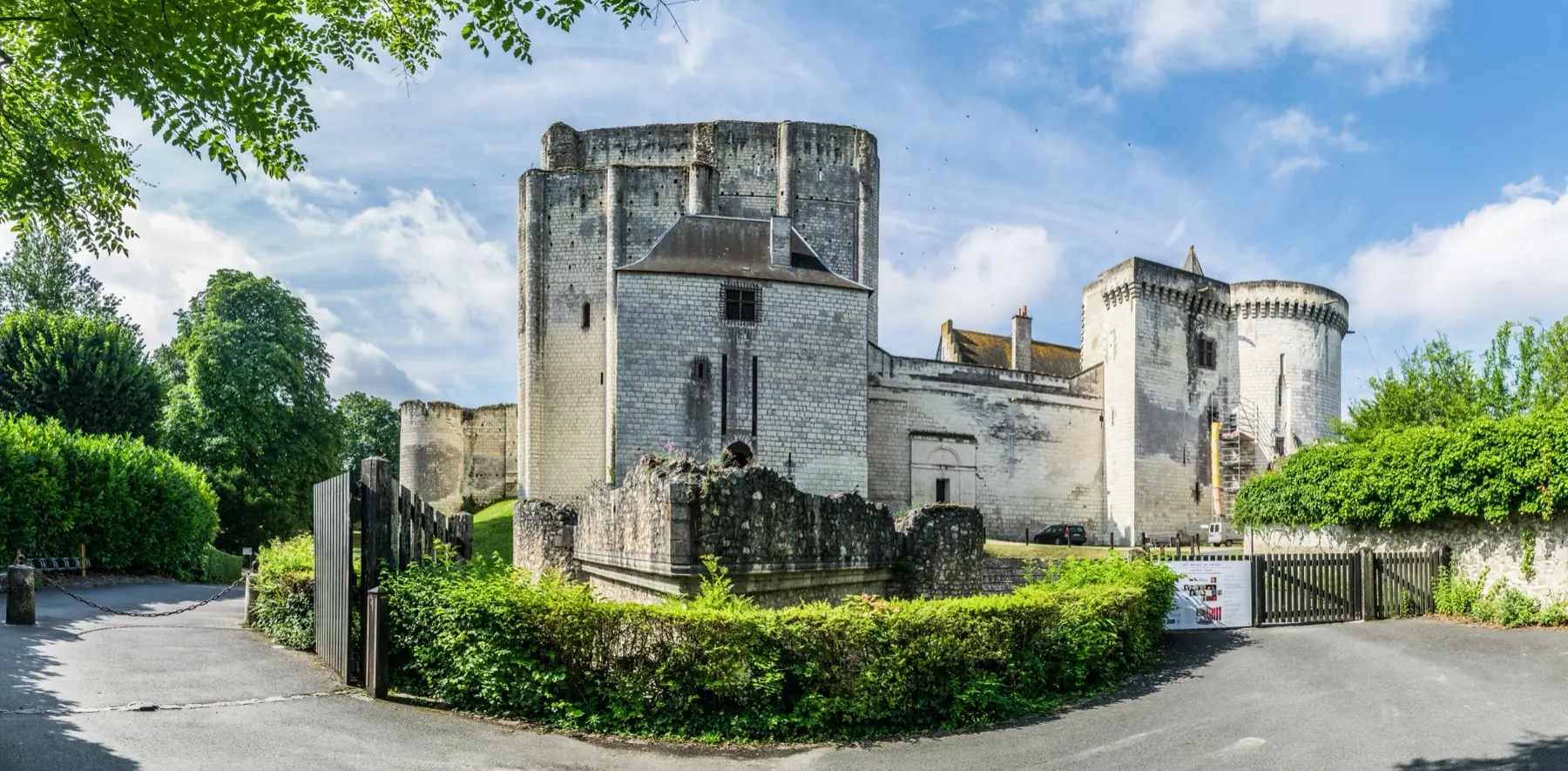
It is a striking picture: here we are at the Château de Loches, in the dungeon of the Martelet tower, standing before King Louis XI’s famous “iron cage”. “Cardinal La Balue”, the king’s adviser and favourite who fell from grace, was sentenced to live in this cube, so cramped he could neither stand up nor lie down. To feed him, a small rectangular hatch for the meagre gruel of medieval prisoners. For the call of nature, another square opening for the chamber pot… It makes you shudder. And yet this is one more of those legends that clutter French history. The truth is far more fascinating!
To understand how this imaginary tale was born, we have to go back to the extraordinary life of Cardinal Jean Balue, which unfolded between Poitou, Touraine, Anjou, Paris, Liège, the princely courts of Europe and the Vatican. For the cardinal was not merely a famous prisoner. He was one of the most influential figures of Louis XI’s reign: a leading diplomat entrusted with the highest missions, a powerful cardinal and a decisive player in the difficult relations between the French monarchy and the papacy. A man who never stopped playing politics, even when everything seemed to stand in his way.
Contents
The art of making a name
His date of birth is uncertain: the historian Henri Forgeot cautiously suggests 1421, ten years before Joan of Arc was burned at the stake. His birthplace is just as hazy. Angles-sur-l’Anglin has settled the matter once and for all with a plaque on his “birth house”. The chroniclers of the time seem to place it in Poitou, at L’Angle-Luçon, a hamlet in the commune of Chantonnay. The only certainty is that his real name was Jean Balue. “La Balue” is a nickname that stuck to him.
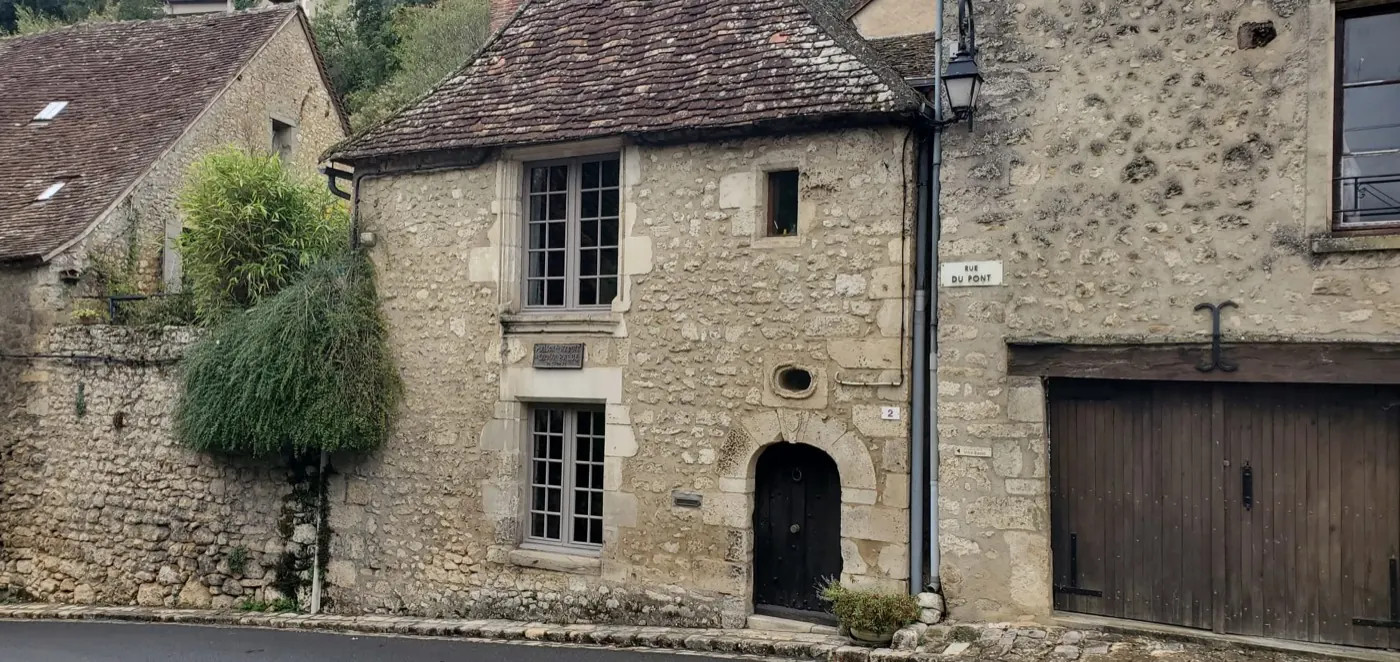
The son of a Paris burgher or of a minor lord, depending on the sources, and a graduate in law, he belonged to that class of educated clerics who, in the 15th century, rose to the highest offices of the state thanks to their legal training and administrative skills. Kings of the time consumed an impressive number of jurists, able to draft deeds, negotiate treaties and settle conflicts of jurisdiction, all ultimately in defence of the Crown’s interests.
Balue first entered the service of Jacques Juvénal des Ursins, Bishop of Poitiers. Jacques was the son of Jean Juvénal des Ursins and Michelle de Vitry, whose funerary monument can be seen in Notre-Dame de Paris. When Jacques died in 1457, Balue joined the household of the Bishop of Angers, Jean de Beauvau. This encounter would shape the rest of his career.
Beauvau gradually entrusted him with several important posts in his diocese. As a reward, in 1461 Balue obtained the deanery (a group of several parishes) of Candé, in today’s Maine-et-Loire. He then became his bishop’s vicar general, in other words his right-hand man in running the diocese.
↑ ContentsAt the heart of power
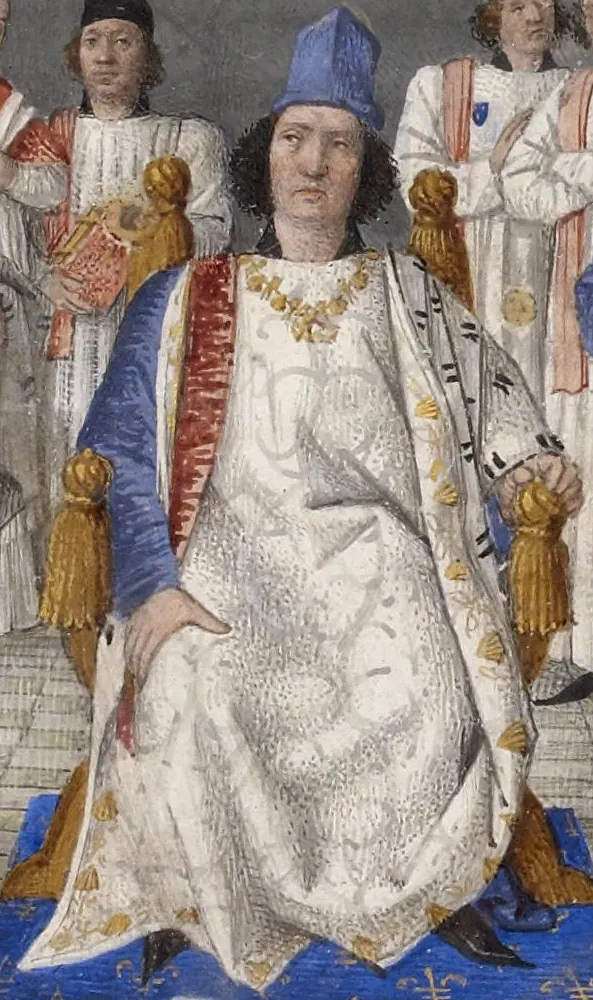
In 1462, Balue accompanied Beauvau to Rome on an embassy sent to the Pope on behalf of Louis XI, who had become king the year before. He stood out for his skills as a negotiator and came back with the title of “apostolic protonotary”, a kind of papal officer who received and dispatched the acts of the cardinals’ assemblies. He was now propelled to the heart of French royal power and of Vatican intrigue.
To set Balue’s story in context, remember that under Louis XI, Touraine held a central place in the political life of the kingdom. Like other rulers of his day, Louis XI, who reigned from 1461 to 1483, had an itinerant court. But he was especially fond of the Loire Valley and its Touraine residences. Amboise was one of the great seats of the monarchy, and the Château du Plessis-lès-Tours, in La Riche, gradually became one of his favourite homes.
Tours was then much more than a provincial town: it was a major political centre, where ambassadors, counsellors, great lords and churchmen crossed paths. The castles of the region were not only residences. Some were also strongholds and places of detention. Montbazon, Loches, Amboise and Onzain thus belonged to a political geography that we know today mostly through its monuments.
↑ ContentsThe rise continues
In 1463, Balue was introduced to Louis XI by Charles de Melun, one of the leading figures at court. The king immediately appreciated his intelligence and skill. Balue became the king’s almoner and confessor, then his secretary and counsellor, and took part in the highest bodies of royal government. He also held financial and judicial offices, notably at the Chambre des comptes and the Parlement of Paris.
Above all, he began to amass wealth: he was appointed commendatory abbot of Fécamp (1464), Saint-Thierry in Reims (1464) and Saint-Jean-d’Angély (1465), and of the priories of Saint-Éloi in Paris and Saint-Jean-des-Sables (1465). So many abbeys whose revenues he collected without ever setting foot in them… Only two ranks were still missing, and he reached them with remarkable ease.
In February 1465, he became Bishop of Évreux. Two years later, taking advantage of his predecessor’s misdeeds, he obtained the bishopric of Angers. On leaving Évreux, he installed his brother Antoine in his place (his family spirit did not stop there, as we shall see…). And on 18 September 1467, Pope Paul II made him a cardinal. In a few years, a humble provincial cleric had become one of the most powerful men in France. Such a rise did not go unnoticed, and it was already stirring reactions.
It is at this time that an episode took place which says a great deal about the climate of the period, and about one side of Balue’s personality. We are in Paris, in the middle of the War of the Public Weal (the great feudal lords had risen against Louis XI). Balue, then Bishop of Évreux, had sided with Louis XI, earning in return the hostility of the Burgundian party. The chronicler Jean de Roye tells the story: on the evening of 23 September 1465, “My Lord the Bishop of Évreux, Balue, was lain in wait for and set upon by certain of his enemies in the rue de la Barre-du-Bec” (the beginning of today’s rue du Temple). Balue received two sword blows. His mule saved his life, carrying the bishop off to his town house in the cloister of Notre-Dame. Despite a search, the attackers were never found. Why the attack? Two explanations quickly made the rounds.
The first is political. Balue was a target for Louis XI’s opponents, and the context of September 1465, marked by tension between the king and the allied princes, makes this hypothesis particularly plausible. The second is, shall we say, more romantic, if less credible. According to the historian Henri Forgeot, a certain lord of Villers-Bocage was also suspected of ordering the attack “for the love of Jehanne Dubois, with whom he was enamoured”. In short, a jealous lover’s petty revenge, and a story to be taken with a grain of salt, even if the picture of the bishop in love, rescued by his bolting mule, was clearly the favourite of the jokers…
↑ ContentsA negotiator who never forgets himself
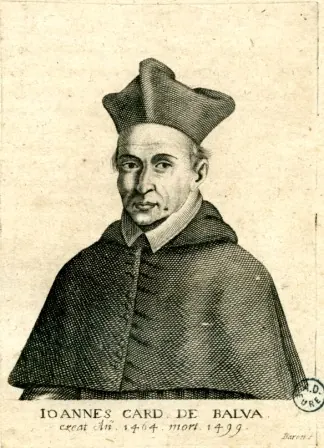
Be that as it may, Balue’s appointment to Angers came at the expense of his former protector, Jean de Beauvau. The two men had gradually fallen out. But their rivalry went beyond personal matters. Anjou was then a very sensitive province. The neighbouring Duchy of Brittany kept a broad autonomy, and its duke, Francis II, regularly opposed Louis XI. The Duke of Anjou, Louis XI’s uncle, the famous King René, was also a territorial power whose loyalty was not his most striking quality.
For Louis XI, it was therefore essential that the bishopric of Angers be entrusted to a reliable man. Beauvau, however, was suspected of dealing with the king’s enemies, and Balue appeared to be the ideal candidate. In June 1467, Pope Paul II deposed Beauvau and transferred Balue from Évreux to Angers. With Paul II, Balue was on very good terms: he played a vital role in the negotiations over the Pragmatic Sanction of Bourges. Adopted in 1438 under Charles VII, this text sought in particular to limit certain papal interventions in the affairs of the Church of France. It strengthened the rights of French church institutions and reduced, accordingly, the sums sent to Rome.
But it left the great lords the privilege of church elections, which was not to the king’s liking. Depending on his interests in Italian affairs, Louis XI therefore manoeuvred, now imposing, now revoking the Pragmatic Sanction. And our Balue played a key role in the negotiations that led to its revocation in 1467. This policy earned him the gratitude of Paul II and helped raise him to the cardinalate. But it also stirred the hostility of the Parlement of Paris, which was deeply attached to the liberties of the Church of France.
↑ ContentsA strange affair
Close to burnout with all his new duties, the cardinal neglected neither good food nor forbidden pleasures. At his trial, the constable Charles de Melun would explain his quarrel with Balue by a woman they were both seeing. According to his account, Balue was in love with a young Parisian woman. Melun showed him letters she had written to him, and a small heart-shaped jewel set with a ruby that she had given him, as a way of proving to Balue that the lady did not love him. At the sight of the letters and the jewel, the prelate is said to have turned “as white as a sheet”.
In fact, Balue spent very little time in Angers. He took possession of his see by proxy in January 1468, then went there in person in February. After that, he left the day-to-day running of the diocese to his vicars general. But he kept a close eye on his local power base, as we would say today, and above all on the revenues attached to it. He had his say in the appointment of church dignitaries and in the management of the diocese’s income. One of the decisions on record is worth a mention: Balue gave King René permission to eat eggs and dairy during Lent, on account of his health.
↑ ContentsFirst setback
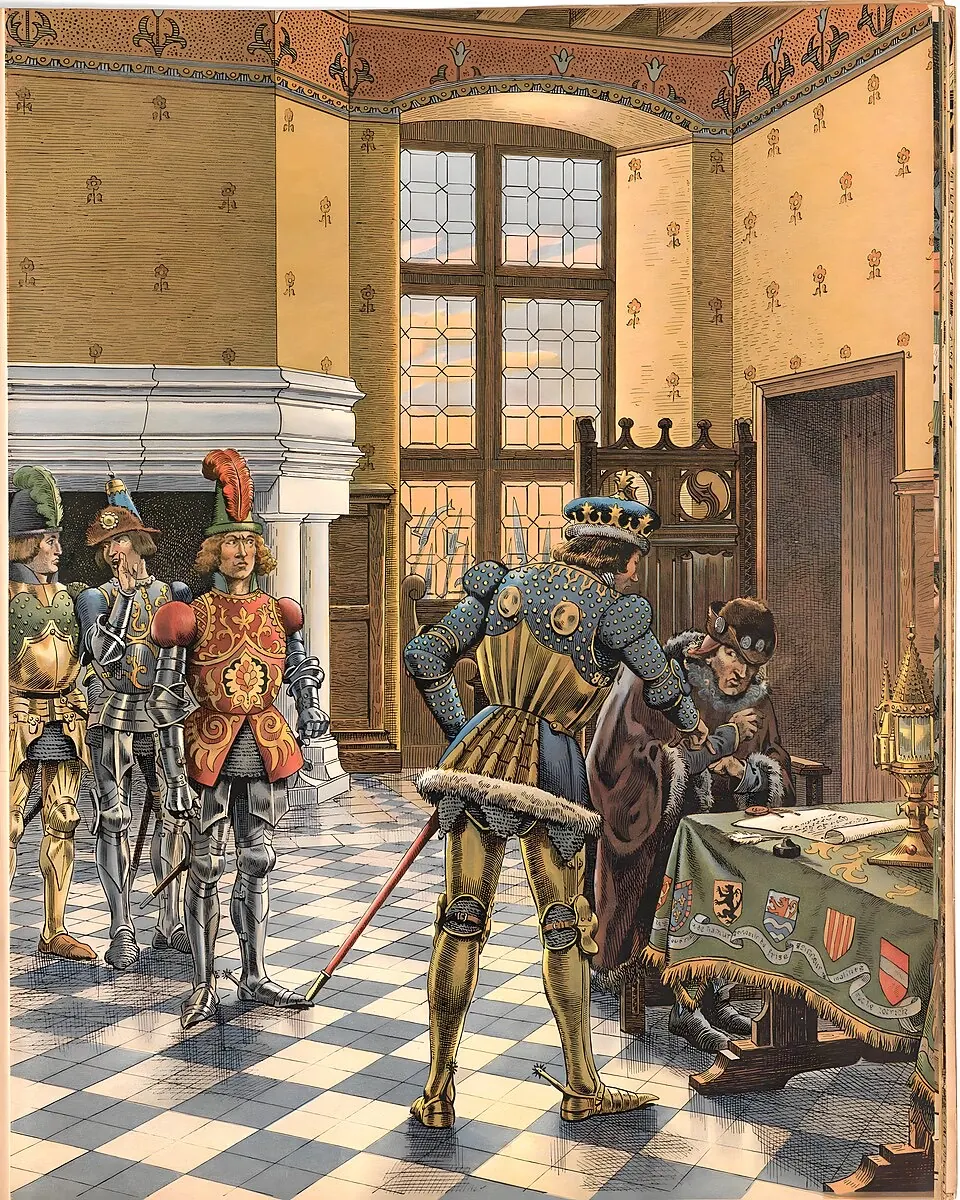
Meanwhile, Balue’s activity reached far beyond Touraine and Anjou. Paris, Rome, Burgundy and today’s Belgium became his new theatres of operation. For Louis XI’s main enemy was now Charles the Bold, newly Duke of Burgundy after the death of his father, Philip the Good. Charles controlled a broad band of territories stretching from Burgundy to the Low Countries, and his ambition was to build a power able to rival the kingdom of France. Balue therefore took part in several diplomatic missions to the duke. His role was especially delicate in preparing and holding the meeting at Péronne in October 1468. That is where the wheel began to turn for this ambitious prelate.
The people of Liège were in conflict with their prince, Louis de Bourbon, an ally of the Duke of Burgundy. Behind the scenes, Louis XI had encouraged opposition to Burgundian rule. When he met Charles the Bold at Péronne to discuss a peace agreement, and just as the negotiations were about to succeed, news of a revolt in Liège reached the negotiators’ ears.
Charles the Bold was furious, all the more so when he learned that the revolt had been stirred up by French agents. He had the gates of the castle and of Péronne locked. Louis XI had no choice but to sign the treaty on draconian terms and to accompany Charles on the punitive expedition the duke launched on the spot against the rebel city. The king would later find it easy to have this agreement, obtained by force, annulled.
↑ ContentsSwan song
For Balue, who had acted as a go-between for the two courts, the accusation of having lured Louis XI into the Péronne trap began to surface. For Louis XI was looking for culprits when he returned to Paris with his pitiful treaty in hand. Balue, on the contrary, felt that his backstage intrigues had helped get the king out of a tight spot, notably by paying Charles’s counsellors, at Louis XI’s request, to spare the king’s life. Without forgetting to charge a hefty price for that service along the way.
Barely a month later, Balue solemnly received his cardinal’s hat as Cardinal of Angers. The ceremony took place in Notre-Dame de Paris on 17 November 1468, before a large and brilliant gathering. The Cardinal of Albi, Jean Jouffroy, who saw him as a rival, delivered a eulogy full of irony, making it clear that the new cardinal owed his promotion not to his merits, which he considered very ordinary, but rather to the Pope’s indulgence and the king’s warm recommendation. Anticipating the downfall he hoped for, he added: “He was not afraid to climb, for fear of falling!” The freshly behatted cardinal should have been wary of this caustic speech… That same evening, he threw a lavish reception, worthy of a private party during Fashion Week, in his brother’s town house near the church of the Blancs-Manteaux.
A chronicler of the time noted that “to delight the guests at dinner, there were a great many very pretty ladies, damsels and young townswomen, companions singing, trumpets, clarions, minstrels with strings and organs, morris dancers and players of farces”. The feast was in keeping: “meats both tame and wild, of beasts and of birds, boiled, roasted, pastries, spices in great quantity and of many flavours”. The same abundance reigned for the wines: “wines for thirst, bastard wines, rosette wines, white wines, claret wines, red wines from many lands and of many tastes”.
↑ ContentsThe betrayal
It looks a lot like a swan song… Sensing the wind turning, Balue tried to open a channel with Charles the Bold, for one of those devious three-cushion shots he excelled at: creating a problem he could then solve, in order to win back the king’s favour. He teamed up with a dubious character, the Bishop of Verdun, Guillaume de Harancourt, who for his part wanted revenge for the royal disfavour he had fallen into because of his embezzlement and dissolute ways. What followed, and the investigation that exposed them, is worthy of The Name of the Rose…

At Amboise, they wrote a memorandum for the Duke of Burgundy’s envoys, detailing what could thwart the king’s plans for his brother Charles in Guyenne, the towns on the Somme that Louis XI was about to conquer, the feudal alliances that seemed to be forming again against him, his talks with England… As a precaution, the two prelates asked the messenger, a certain Simon Bellée, to copy the message in his own hand, and burned the original. One last safeguard: since the memorandum was written without a single name in it, they made Bellée learn the names by heart. That detail would bring the whole thing down. On the morning of 22 April 1469, Simon Bellée left Tours for Burgundy with the memorandum and a letter of credence confirming that he was acting on behalf of Cardinal Balue. The grain of sand came at Cloyes-sur-Loir: exhausted, the envoy’s donkey refused to move. He beat it, cursed it, pulled it by the bridle, all in vain. The scene drew the attention of villagers in need of entertainment, who gathered round and laughed at Bellée’s fruitless efforts…
The show also drew the attention of two of the king’s soldiers, who questioned Simon Bellée. They grew more and more suspicious at the envoy’s muddled explanations. They searched him and found the papers sewn into the lining of his doublet. Thrown into prison, the envoy panicked and revealed the whole story, which he knew by heart, and for good reason. That very evening, the king knew everything.
Balue was in Tours when Simon Bellée was intercepted. Summoned by Louis XI to the Château d’Amboise, he went there and was arrested on 23 April 1469. His first interrogations took place on the spot. The affair that would occupy French and papal diplomacy for more than eleven years thus began within a very small corner of Touraine.
↑ ContentsPrison tourism
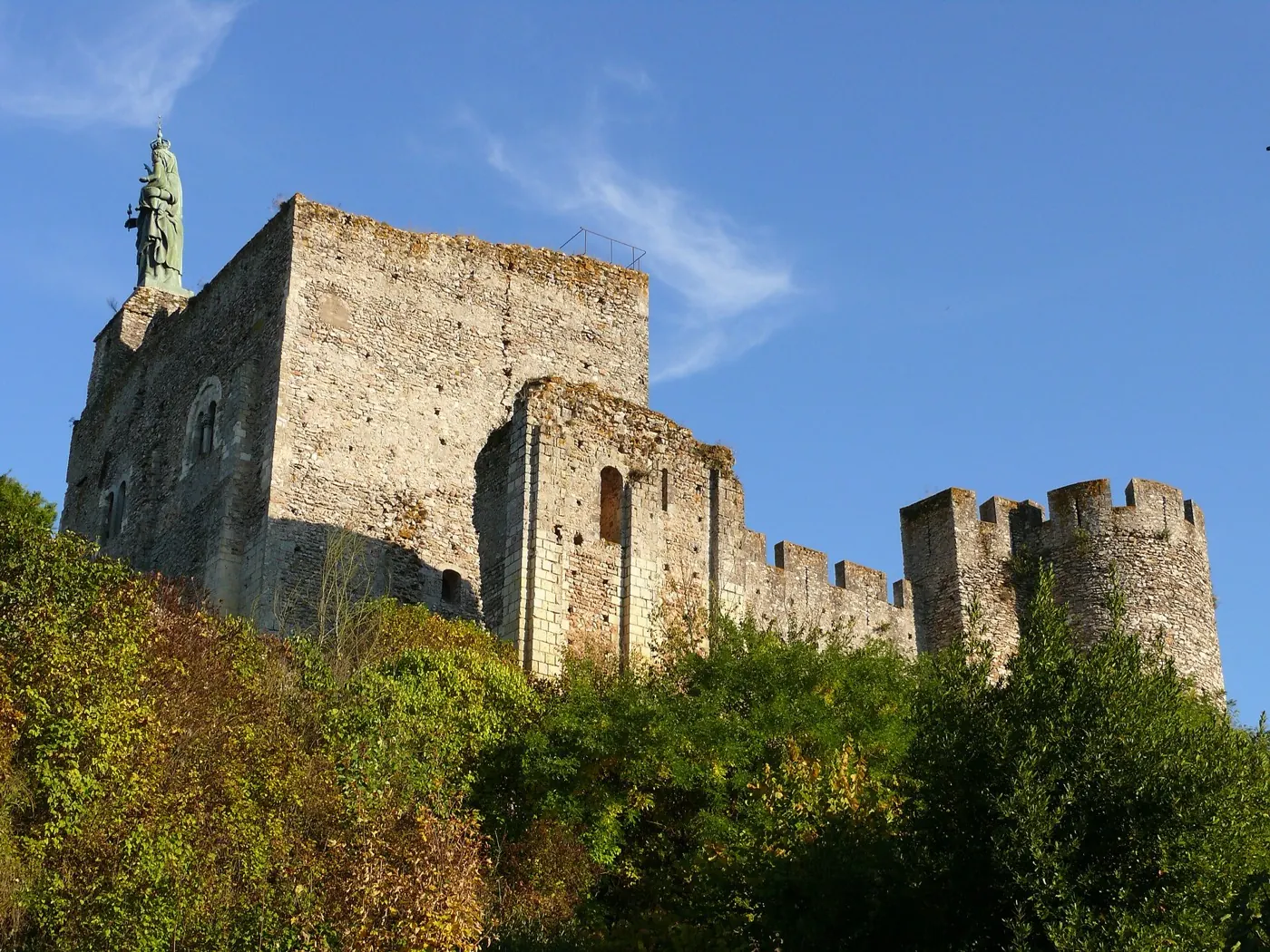
The cardinal was first transferred from Amboise to Montbazon, into the cells of the grim medieval fortress whose square keep, built by Fulk Nerra and crowned with a giant statue of the Virgin, still towers over the village today. At the end of January 1470, the prisoner was taken to the Château d’Onzain on the king’s orders. In February, Louis XI had 70 livres tournois paid to Guyon de Broc, his steward, to have “an iron cage made at the castle of Onzain for the safe keeping and guard of the Cardinal of Angers”. This is the only slender trace linking Balue to the famous cage, and we do not know whether he was ever actually locked inside it.
Louis XI wasted no time. In May 1469, he had the property of the man he had so generously enriched seized. The estimate of the movable goods seized in Paris alone exceeded 14,000 livres parisis. The accounts list more than 6,000 livres parisis in cash, some 4,000 livres of silverware, precious books, tapestries, furs and even a “cloth of gold” (velvet, satin or silk woven with gold thread) more than 28 metres long. The cardinal received a royal pension of 2,000 livres tournois a year. His church benefices brought him about 7,000 livres more, and the king had granted him 6,000 écus when he was made cardinal.
Confiscation turned into redistribution, as was the custom of the time. While the silverware was sold, fabrics and furs went to reward Louis de Crussol, governor of the Dauphiné. Tapestries passed to Tanneguy du Chastel, one of the protagonists in the murder of John the Fearless on the bridge at Montereau. Balue’s library was entrusted to the future chancellor Pierre d’Oriole. Louis XI’s favours had built Balue’s power; withdrawing them now served to strengthen other loyalties to “the universal spider”.
The cardinal’s brother, Nicolas Balue, and his wife Philippe Bureau protested: some of the confiscated tapestries had been given to them to furnish their town house (the very one where the cardinal had partied on the famous evening of the Notre-Dame ceremony) and to prepare for the birth of their child. The truth is tragicomic… Guessing that things were about to turn nasty, and claiming he wanted to help the young couple settle in, the wily cardinal had gradually moved his furniture and tapestries to his brother’s home. He had even ended up moving in himself, his own house having been stripped bare. When the king’s agents came to collect the cardinal’s furniture, the whole family swore blind that it no longer belonged to him!
↑ ContentsA prisoner who keeps himself busy
The unusual length of his imprisonment (11 years) is explained by his status. Jean Balue was no ordinary subject: he was a cardinal of the Roman Church. In the Middle Ages, members of the clergy were subject to specific judicial rules, and in the case of a cardinal, the Pope’s jurisdiction was decisive. Louis XI could not simply have Balue condemned by his own judges. He needed the cooperation of the Holy See.
A telling detail: on 2 October 1469, while held at Montbazon, Balue conferred the treasurership of Angers on Charles Paon. On 2 July 1472, a deed drawn up at Chinon records Balue appointing one of the king’s secretaries to a prebend of his cathedral. This may prove two things: the prisoner was probably able to work, and he still enjoyed the revenues of his bishopric. It does not, however, prove that he was imprisoned at Chinon, since the task may have been entrusted to one of his representatives.
Behind bars, then, he went on managing his affairs. And he devoted his free time (so to speak…) to catching up on his reading. A canon of Chartres with whom he corresponded from prison, Robert Duval, remarks that he did well to gather the many works he wished to study, from which his political activities had long kept him away.
In his days of splendour, Balue had indeed owned a library of about a hundred volumes, valued at 700 livres tournois: Terence, Seneca, Boccaccio, works of canon law, history and theology. At the time, this was a considerable fortune.
↑ ContentsA clash of two powers
From 1469, Louis XI took steps with Pope Paul II. Ambassadors, then cardinals, were appointed to begin endless negotiations. The king wanted his former adviser’s treason recognised. The papacy meant to protect its prerogatives and prevent a cardinal from being condemned by a sovereign without the regular canonical procedure. No trial ever led to a final conviction. Balue was therefore not simply a defendant locked up for treason: he was a political prisoner held without final judgement.
The same problem arose over his bishopric of Angers, which Louis XI wanted to take away from him. Here again, Bishop Balue held two kinds of power: temporal (property, revenues, seigneurial rights) and spiritual (religious authority and government of the diocese). The king could certainly act on the property and revenues under his authority. But he could not depose a bishop: that decision belonged to the Church alone.
Ironically, Louis XI first chose to restore the former bishop, Jean de Beauvau, at Angers. A few years earlier, he had backed Balue to have Beauvau deposed. Now he backed Beauvau against Balue. The Archbishop of Tours, Élie de Bourdeilles, defended the rights of the imprisoned cardinal. Rome confirmed that Balue remained, in law, Bishop of Angers during his detention… and afterwards!
In 1476, the Pope found a compromise: Beauvau received the title of apostolic administrator. He could thus govern the diocese without being recognised as its titular bishop. When he died in 1479, Louis XI imposed another candidate, Auger de Brie. Even in prison, Balue thus remained at the centre of a legal battle between the King of France, the chapter of Angers, the Archbishop of Tours and the papacy. Meanwhile, “La Balue” continued his prison tour. After Tours, Onzain and Montbazon, he is said to have been held at Loches, although not a single historical record mentions it. Louis XI’s accounts also record 50 gold écus paid to Master Chrestien Castel, a physician, to compensate him for journeys from Tours to Chinon in April 1480, at the king’s request, to treat Cardinal Balue and other patients.
↑ ContentsA triumphant return
In December 1480, Jean Balue was at last set free. Papal negotiations had finally obtained what no judgement had granted. The decisive role fell to Cardinal Giuliano della Rovere, the Pope’s legate in France (he would later become Pope Julius II, patron of Michelangelo and Raphael). Then held in Tours, Balue was handed over to della Rovere’s custody and left the kingdom. He reached Rome in February 1482. Under Sixtus IV, he gradually regained his influence. In January 1483, he was given the suburbicarian see of Albano, one of the seven dioceses on the immediate outskirts of Rome. With it came the prestigious rank of cardinal-bishop and a full right to vote in papal elections! Between January and September 1483, Balue became cardinal protector of the Cistercian order. At the time, the monastic order was going through a crisis that pitted the powerful abbeys of Cîteaux and Clairvaux against each other. Once again, Balue stepped in to settle the dispute.
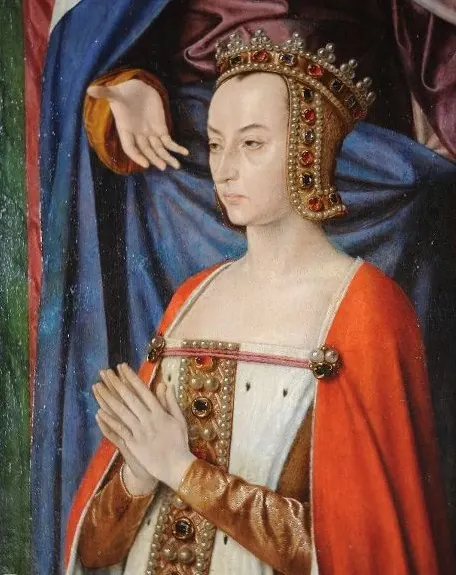
On 30 August 1483, Louis XI died at the Château du Plessis-lès-Tours. His son Charles VIII was only thirteen. The kingdom was governed by his sister, Anne of Beaujeu, and her husband Pierre de Bourbon. Balue’s fortunes were about to change again. The new government sought to ease relations with the Vatican. The cardinal returned to France in majesty, with the particularly high rank of legate, holding an almost complete delegation of papal power for the mission entrusted to him.
In July 1484, Balue went to Angers, where he had not shown his face since 1468. The great pomp of his solemn entry left a lasting impression. He arrived by the road from Les Ponts-de-Cé. A crowd of nobles, clergy and townspeople gathered to meet him. A lord led his mule by the bridle. With the legate’s cross carried before him, the cardinal advanced in his pontifical vestments, under a canopy of white damask decorated with his coat of arms. Fourteen vassal barons took part in the ceremony. The procession crossed the city, went to the cathedral and then to the abbey of Saint-Serge.
The next day, Balue met the canons. Somewhat sheepishly, they explained that Louis XI had forced them to recognise the authority of Auger de Brie. Smooth as ever, the cardinal gladly granted them absolution: his mind was already elsewhere… A second international career awaited him. In October 1484, Charles VIII entrusted him with the protection of the kingdom’s affairs at the Holy See. Balue became a privileged intermediary between the French monarchy and the papacy, with a pension of 3,000 livres.
↑ ContentsThe intrigues resume
Anne of Beaujeu also agreed to compensate him for the confiscations he had suffered under Louis XI, to the tune of 20,000 livres paid over five years. But whether out of hubris or because old habits die hard, Balue could not help returning to the very activities that had brought about his downfall. His official mission was, among other things, to promote peace and stability in the kingdom during the minority of Charles VIII and the regency of Anne of Beaujeu. And there he was, forging ties with the regent’s opponents, notably the Duke of Orléans, the future Louis XII.
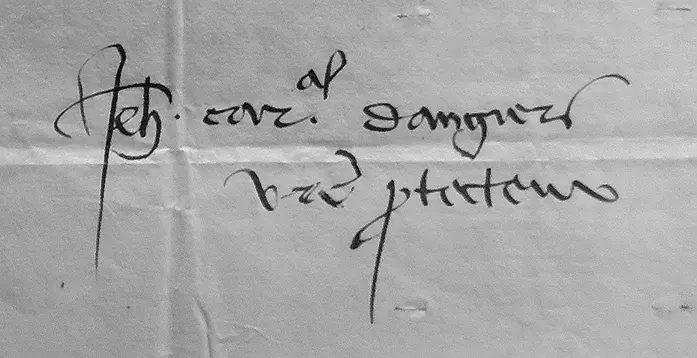
He encouraged the duke’s Italian ambitions and dangled before him the prospect of marrying Anne of Brittany once his marriage to Jeanne de France had been annulled. The Italian ambassadors choked with rage: “huomo diavoloso, scandaloso e passionato”. Their transalpine curses hardly need translating… Anne of Beaujeu and the Italian diplomats demanded his recall, in vain: the Pope stood by him and flatly refused.
↑ ContentsClose to the Pope
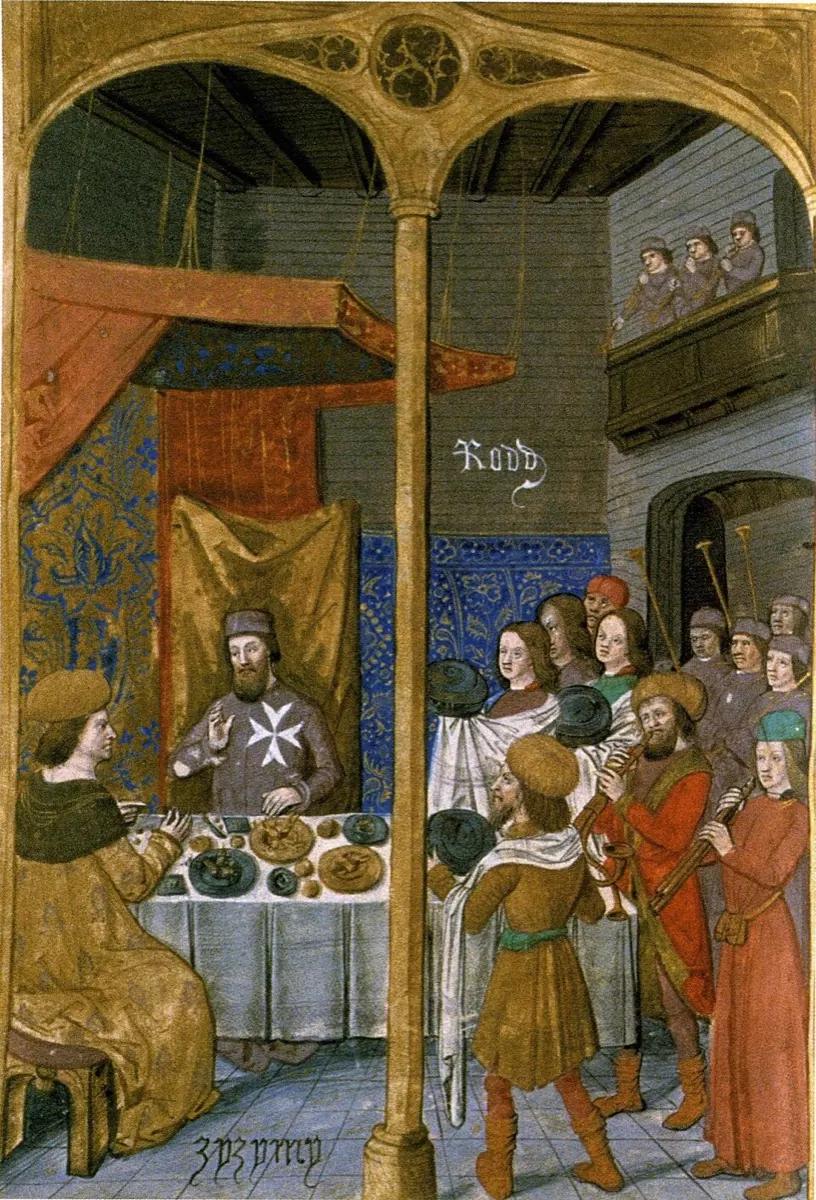
And that is not all: Balue also served as protector of the Knights Hospitaller of St John of Jerusalem, based in Rhodes, whose Grand Master was a Frenchman, Pierre d’Aubusson. In 1488–1489, Balue resolved a diplomatic affair involving the Ottoman prince Cem (Djem), brother of Sultan Bayezid II. A pretender to the Ottoman throne, Cem had been captured by the Hospitallers. His detention in France quickly made him a “lucrative prize” fought over by the Western, Middle Eastern and papal powers.
After far-fetched adventures whose telling would take us off topic, it was finally Balue who was put in charge of guarding the Ottoman prince and who prepared his entry into the Eternal City on 13 March 1489, where he would meet the Pope. The former prisoner of the castles of Touraine now found himself at the heart of diplomatic relations between the Holy See, the French Crown and the Ottoman Sublime Porte.
He then carried out papal missions in Italy, a politically fragmented land at the time. To uphold the Pope’s authority against local lords and rival powers, Balue was sent as legate to the March of Ancona, a region of central Italy on the Adriatic. While already serving as legate, on 13 March 1491 he received the suburbicarian see of Palestrina, another ecclesiastical district near Rome.
It was during this mission as legate that he died, on 5 October 1491, at Ripatransone. On 18 October, the cardinal’s remains entered Rome. Twenty-five servants of his household accompanied them with lighted candles, but the Roman clergy was conspicuous by its absence. The solemn funeral did take place on 5 November at Santa Prassede, in the presence of several cardinals. The master of papal ceremonies, Johann Burchard, noted the unsightly effect of the catafalque, too wide and too low. As he had left no will, his fortune, estimated at a hundred thousand ducats, went to Pope Innocent VIII.
A funerary inscription, now lost, recalled the extraordinary turns of Jean Balue’s destiny:
“Here lies one who, having known prosperity and adversity, and suffered the vicissitudes of fortune, died gloriously at the age of seventy in Picenum [the region of the Marche], while serving as legate under the pontificate of Innocent VIII. A memorable example of the instability of human destinies and of fortune. To Jean of Angers, Bishop of Albano.”
↑ ContentsEvery tour by La Compagnie des Guides is nourished by investigations like this one. What we discover, we share with you.